
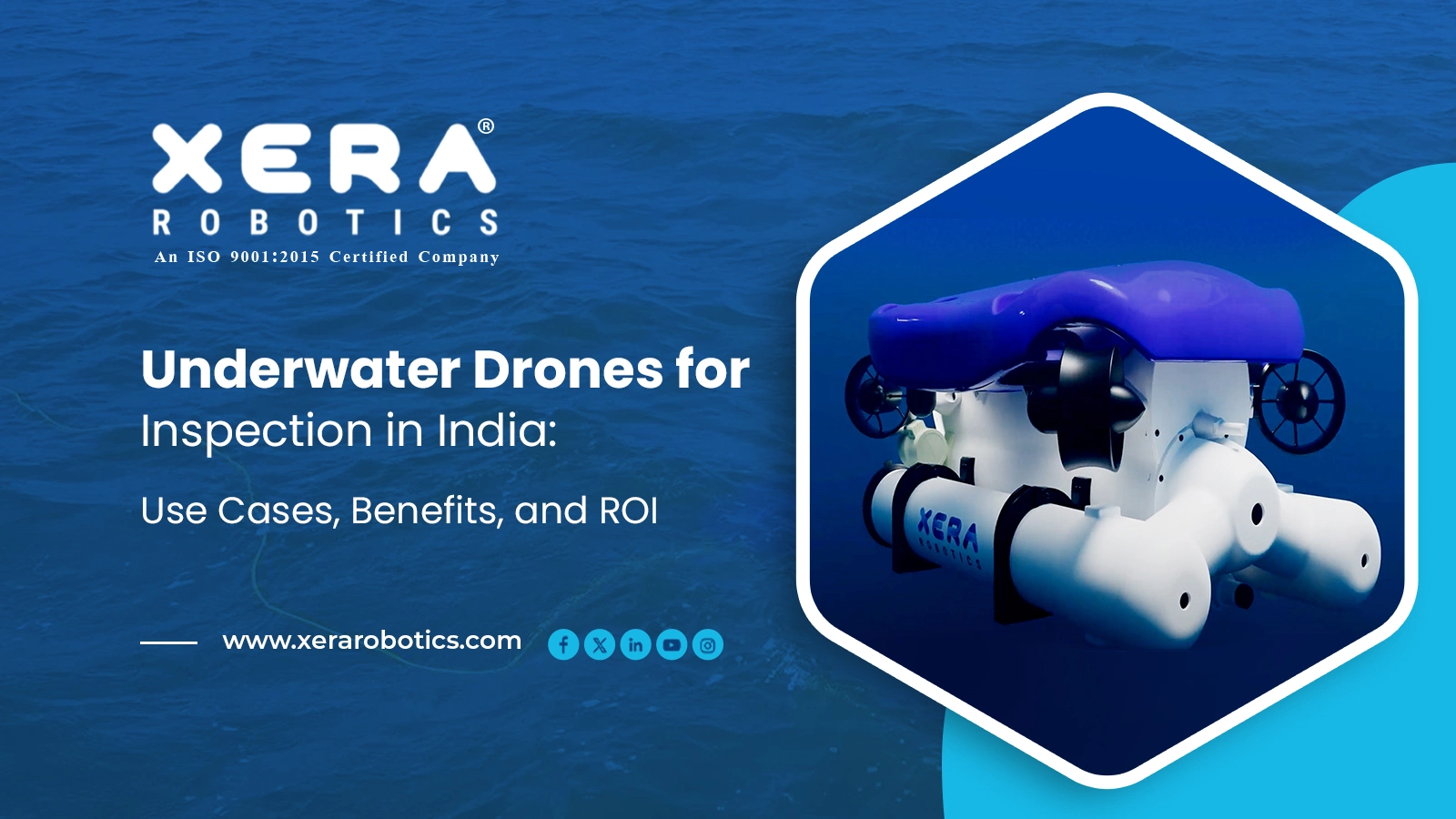
The maritime industry is evolving rapidly, and one of the most significant advancements in recent years is the use of underwater drones for inspection. Companies like Xerarobotics are at the forefront of this transformation, enabling more efficient, cost-effective, and safer underwater inspections in India. Whether it's a ship hull inspection in India, underwater infrastructure inspection in India, or checking the condition of offshore assets, underwater drones are providing powerful solutions. This blog will dive into the use cases, benefits, and return on investment (ROI) of underwater drones in the Indian maritime sector
Use Cases of Underwater Drones in India
Underwater drones, also known as remotely operated vehicles (ROVs), are revolutionizing the way maritime inspections are conducted in India. Below are the key use cases:
1. Ship Hull Inspection in India
Traditional ship hull inspections often required divers to inspect the ship's structure underwater, which was not only time-consuming but also risky and costly. With Xerarobotics' underwater drones, the process has become much more efficient. These drones can capture high-definition video footage and detailed images of the hull, inspecting areas that are difficult for human divers to access. With integrated sonar technology, drones can detect potential defects such as cracks, corrosion, or fouling. This technology significantly reduces the time taken for ship hull inspections and minimizes risks to human life.
2. Underwater Infrastructure Inspection in India
India's rapidly growing port and offshore infrastructure requires constant monitoring for safety and compliance. Underwater drones are a perfect tool for inspecting jetties, piers, pipelines, and offshore structures. Using ROVs from Xerarobotics, inspections can be conducted regularly and in difficult-to-reach areas. These drones can assess the integrity of submerged assets, ensuring the safe operation of critical infrastructure without the need for downtime or disruption.
3. Offshore Asset Inspections
Offshore assets, such as oil rigs and underwater pipelines, often require routine inspection to ensure their structural integrity. In regions like the Arabian Sea and the Bay of Bengal, where such assets are numerous, drones are the ideal solution for these inspections. They can provide real-time data on asset conditions, detect signs of corrosion, wear, or damage, and ensure the timely maintenance of these assets.
4. Environmental Monitoring
Environmental protection is increasingly becoming a priority in maritime sectors. Underwater drones can be used to monitor the health of marine ecosystems. They can gather valuable data on water quality, coral reefs, fish populations, and submerged vegetation. For instance, they are used to measure water salinity, temperature, and sediment levels in areas near underwater infrastructure.
Benefits of Underwater Drones for Inspection in India
The introduction of underwater drones has brought about a range of benefits, both operationally and financially. Here's a look at some of the key advantages:
1. Enhanced Safety
One of the biggest advantages of underwater drones is the improved safety they offer. Ship hull inspections, underwater infrastructure checks, and offshore asset evaluations traditionally required human divers, who faced a range of dangers, including accidents and exposure to harmful underwater conditions. Drones eliminate the need for divers to go into potentially hazardous environments, significantly reducing the risks involved.
2. Increased Efficiency
Underwater drones are able to carry out inspections far more efficiently than human divers. They can operate 24/7, often working in harsher conditions where human divers would not be able to. Drones equipped with high-definition cameras and sonar sensors can provide real-time feedback, allowing companies to identify issues faster and act on them without delay.
3. Reduced Operational Costs
Traditionally, underwater inspections required the deployment of a team of divers, along with support vessels, safety equipment, and personnel. This process could be quite costly. Underwater drones, however, reduce the need for costly equipment and labor. Moreover, the time spent on inspections is significantly shorter, resulting in reduced downtime for vessels and infrastructure.
4. Accessibility to Remote Locations
In India, many of the maritime assets, like offshore platforms or submerged infrastructure, are located in remote or difficult-to-reach areas. Underwater drones are capable of operating in these challenging conditions, whether in deep waters or under harsh weather. They are designed to work autonomously or remotely, reducing the need for expensive support vessels or additional personnel.
5. High-Quality Data Collection
One of the major benefits of using AI underwater asset inspection in India is the quality of the data collected. Underwater drones provide high-definition footage and high-resolution images, along with sonar and other sensing technologies, enabling accurate inspections. Xerarobotics drones are equipped with AI-powered features that analyze the collected data to detect anomalies, reducing human error and increasing inspection accuracy.
ROI of Underwater Drones in the Indian Maritime Sector
While the initial investment in underwater drone technology can be substantial, the long-term ROI is highly favorable. Here's how companies can benefit:
1. Faster Inspections
The reduced time taken for inspections translates directly into savings for businesses. For instance, ship hull inspections in India, which once took several hours or even days, can now be completed in just a fraction of the time, resulting in lower operational costs.
2. Lower Maintenance Costs
With drones regularly monitoring underwater assets, any potential issues, such as structural damage, corrosion, or wear, can be detected early. This early detection prevents costly repairs and extends the lifespan of infrastructure and assets, thereby saving money in the long run.
3. Reduced Risks and Liability
By using drones, companies can eliminate the risks associated with human divers, reducing the chances of accidents and injuries. This reduction in risk also leads to fewer insurance claims and liabilities.
4. Competitive Advantage
The adoption of cutting-edge technology like AI underwater asset inspection in India not only improves operational efficiency but also positions a company as a leader in innovation. It can attract new customers who are looking for reliable and technologically advanced solutions for underwater inspections.
5. Data-Driven Decision Making
The real-time data collected by underwater drones allows companies to make well-informed decisions about asset maintenance. Instead of relying on periodic inspections, companies can have continuous visibility into the condition of their assets, leading to better planning, budgeting, and strategic decision-making.
How Underwater Drones Are Transforming Ship Hull Inspection in India
Underwater drones have revolutionized ship hull inspections in India, providing a faster, safer, and more cost-effective alternative to traditional methods. Drones equipped with high-definition cameras, ultrasonic sensors, and sonar technology can conduct comprehensive inspections of a ship's hull in just a few hours. This not only reduces downtime for ships but also allows for more frequent inspections, ensuring better maintenance and safety standards.
Xerarobotics' underwater drones are equipped with advanced AI that helps detect structural issues like cracks, corrosion, or paint deterioration with a high degree of accuracy. The AI-powered system can even generate detailed reports, identifying problem areas and offering predictive maintenance insights. This level of accuracy ensures that ships are safe and compliant with regulations while minimizing the risk of unexpected failures.
The Future of AI-Powered Underwater Asset Inspections in India
The future of Underwater inspections in India is set to be shaped by the fusion of AI technology and underwater drones. AI-powered systems can analyze vast amounts of inspection data in real time, identifying potential risks or maintenance issues with minimal human intervention. Companies like Xerarobotics are developing solutions that not only capture images but also analyze them on the spot, making the entire process faster and more efficient.
As AI technology evolves, we can expect drones to be able to autonomously perform complex inspections, generate predictive maintenance models, and optimize operations for maximum efficiency. This will significantly enhance the safety, reliability, and cost-effectiveness of maritime operations across India.
Conclusion
The integration of underwater drones for inspection is changing the landscape of maritime safety and infrastructure management in India. From ship hull inspections in India to underwater infrastructure inspections, these drones are providing a new level of precision, safety, and cost-effectiveness. Companies like Xerarobotics are helping to lead this transformation, making underwater inspections more efficient, data-driven, and accessible.
With the added benefit of AI underwater asset inspection in India, maritime companies can look forward to a future where maintenance is predictive, inspections are faster, and the ROI is undeniable.